Welcome back to NAGCHAMPA. That stands for New Age Grammy Challenge: Healing Assessments of Musicians Perceived as Awful.
We’re listening to every album that was ever awarded, or nominated for, the Grammy Award for Best New Age, Ambient, or Chant Album.
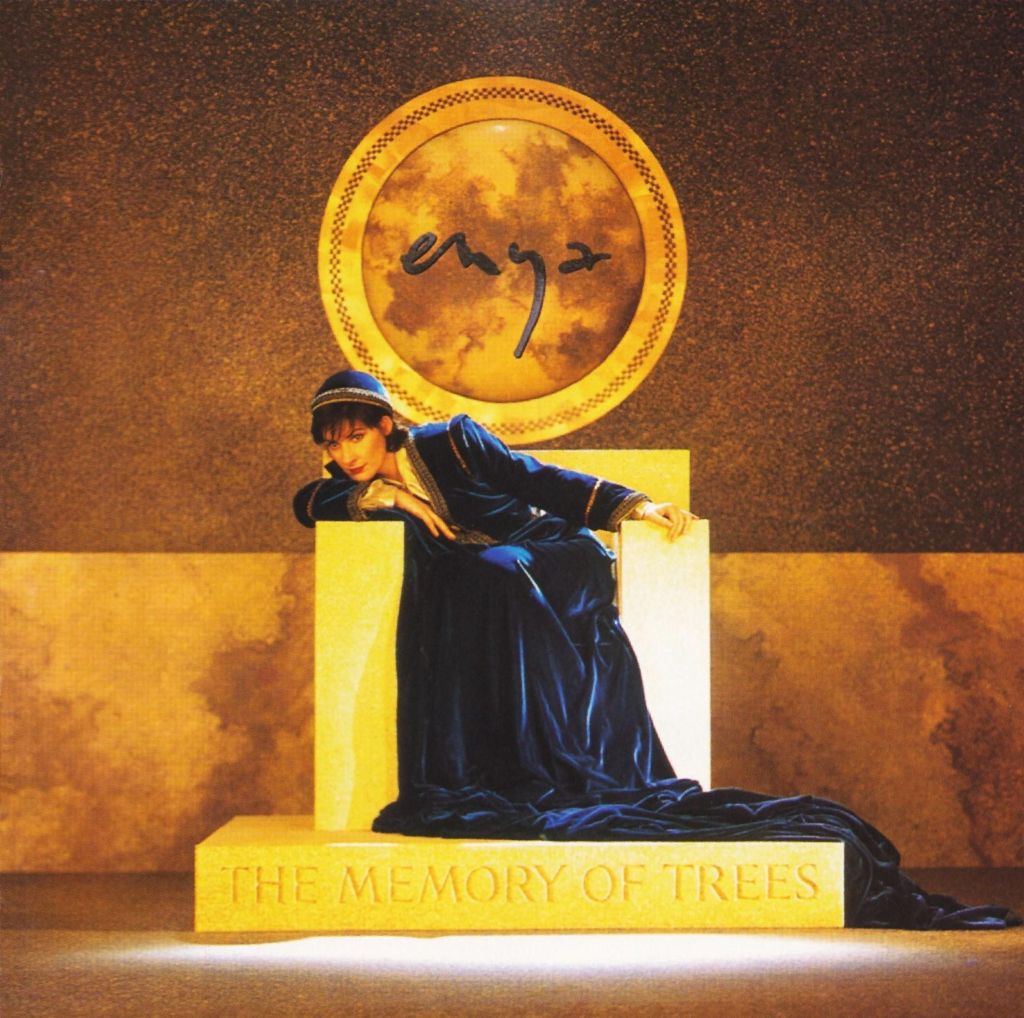
We’ve reached 1997, when the award went to Enya for her fourth studio album, The Memory of Trees. Between 1993 and 2007, every time Enya released an album, this award was a given. No other New Age artist stood a chance if there was an Enya album in the running. This spell would be broken in 2017, when her Dark Sky Island album lost out to the second album by White Sun. Oh, and her 2008 Christmas album wasn’t even nominated. Maybe festive albums aren’t eligible for this gong.
Anyway, for the time being, if Enya’s in town, every other New Age musician may as well stay at home. This is her game.
But did she deserve to win five New Age Grammy awards, effectively trivialising any work produced by any other artist any year she happened to win an album?
Yes. Of course she did.
When I first started listening to all of these New Age albums, my goal was to try and determine just what makes “New Age” music so “New Age”. The best I could come up with: New Age music is basically ambient music, or light jazz, that explicitly sets out to make you feel good, and largely succeeds.
Eventually, this ceased to be an academic exercise. I kept listening to all of these New Age albums simply because I really, really like this sort of music. It’s lovely.
But things have changed again. I’m on a different kind of quest now. I’m desperately seeking enlightenment. I need to re-enchant my world, by force if necessary. I’m prying open my third eye. Music alone won’t get me there, but it will help. And I strongly suspect that music of this nature could hide some, if not all, of the answers.
I know it won’t be easy. I know my journey will be long, painful, and full of terrors and uncertainties. But I also know that, having succumbed to the mind-altering mushrooms and scrambled out of the snake pit; and having watched in horror as the masked cultists enact the battle between Saturn and plantlike proto humanity; and once the intoxicating fug of incense eventually gives way to the earthy scent of candles and braziers; I know that awaiting me in that final chamber, sat atop her stone throne with a welcoming smile on her face, will be Enya, the Faery Queen of Eternity.
And the music playing in that room, so deep underground that day and night are negotiable terms, will sound exactly like The Memory of Trees, the instrumental opening to the album of the same name. Enya will descend from her throne and hand me a cup of purple wine in an ancient earthenware goblet. Knowledge and science will course through my veins with every sip. The Secret History of the World, of the Universe, awaits.
Enya albums generally open with gentle instrumentals like this. They cast a spell. It’s Enya’s way of welcoming you to her world. It’s a world of soft synth washes, pizzicato strings, chiming gongs, thunderous orchestral percussion, and echoey multitracked vocals to create entire choirs of Enyas that sing in English, Irish, Latin, and Spanish. It does you good to spend time in this world.
That title, though? The Memory of Trees. I used to think there was something post apocalyptic going on here. There are no more trees, but we remember them. We miss them. But no. Apparently, Enya’s evoking the druidic idea that trees have a consciousness. This is Enya wondering what the trees might think of us humans. And based on what we hear, the trees seem to think very highly of us.
Anywhere Is was the single, and a top 10 hit in the UK. It has an insistent staccato line that you could imagine a group of toy soldiers singing as they parade around an ice palace.
I remember seeing this one on Top Of The Pops in 1995.
When Enya sang:
“I walk the maze of moments…”
In my head I sang:
“And then Sir Henry Unton…”
And then Sir Henry Unton did what, exactly? Who is Sir Henry Unton, and why was I, aged eight, singing his name to the tune of an Enya ditty?
Sir Henry was an Elizabethan English diplomat, who is perhaps best known for the unusual portrait his widow commissioned following his death. The Unton Memorial Portrait tells Sir Henry’s life story, from his birth until his lavish funeral, incorporating his travels in Italy and his military service in the Netherlands:
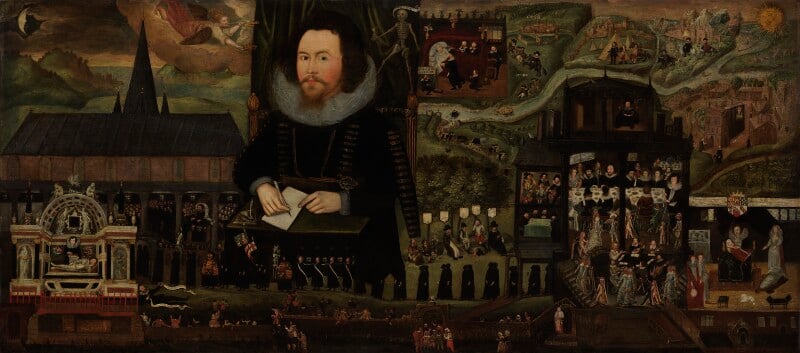
We did a project at school, in which we had to design our own memorial portraits. We had to draw a picture of ourselves in the middle, and surround this with pictures of important events from our short lives. I cannot remember what I included in my memorial portrait. But as I was only eight, there’s a 100% chance that Sonic The Hedgehog featured prominently. Maybe he still would were I to make a memorial portrait today.
Anyway, next on The Memory of Trees we get Pax Deorum, and here we have something truly remarkable: GOTHIC ENYA.
Can Enya be considered goth? Yes. If All About Eve and Cocteau Twins can be considered goth, then so too can Enya. That cover image, after all, is based on Maxfield Parrish’s 1906 painting, The Young King of the Black Isles.
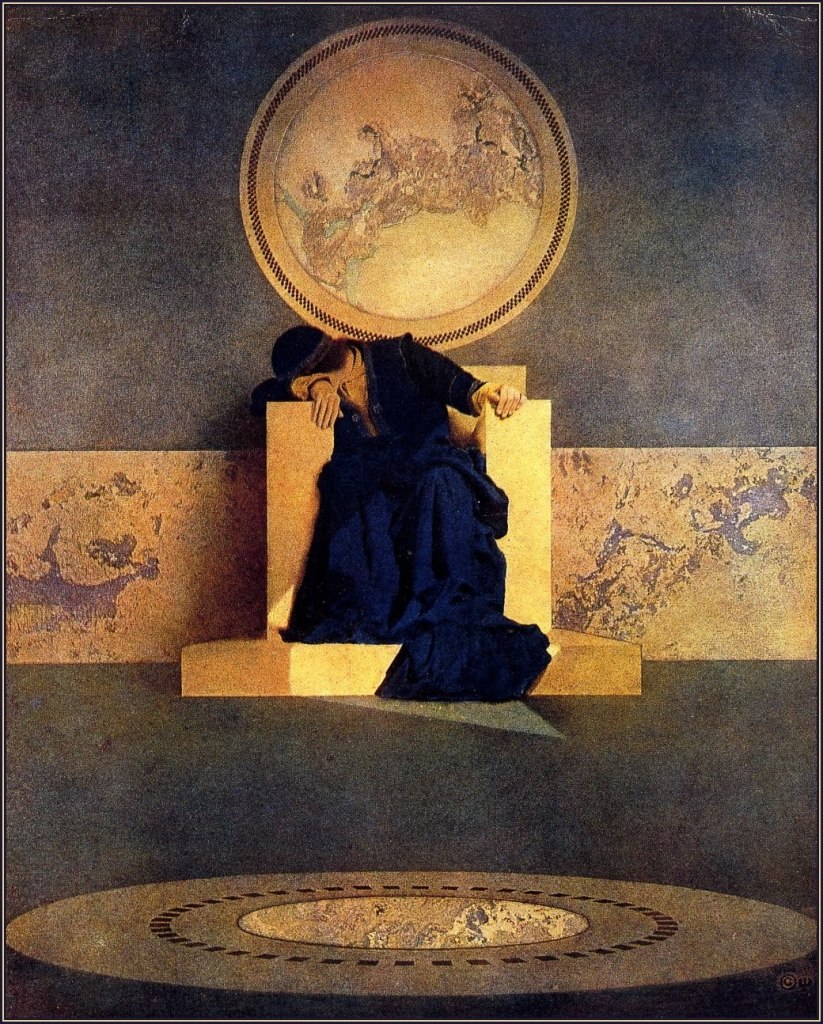
This painting shows a scene from the One Thousand and One Nights stories. A young king is depicted despairing, and with good reason. Everyone in his kingdom has been transformed into fish. Meanwhile, his unfaithful wife spent a full year lamenting in her Palace of Tears, only emerging to transform our poor young king into a statue, the better to torture him. It’s a very gothic tale, then, which of course makes Enya as gothic as a snakebite and black.
So what does gothic Enya sound like? Sepulchral chanting over ominous bass notes. Yet halfway through her dark lament the mood brightens a bit, as if a glowing fog has just descended on a graveyard to remind you that daylight exists. But the fog lifts almost as soon as it falls, leaving you alone in the dark once more.
Enya recorded this album in a long room with big windows at either end, with a piano overlooking the Wicklow Mountains. A room with a view, and a view that surely fed into the music: Much of this album is stately and almost static, content just to be, with Enya’s voice drifting over the valleys like a fine mist.
There are highlights. I’m particularly fond of Tea-House Moon, with its odd bouncy synth sound. The title suggests that it’s intended to sound Far Eastern, but it sounds like ceremonial Martian music to me. It’s music for flowing robes, pulsating brains, and giant unblinking eyes.
Then there’s Hope Has A Place, on which the vocals sound particularly ethereal, because Enya recorded them live on the banks of the Silent Valley Reservoir. Presumably numerous sailors were lured to their death that day, having made the fatal mistake of heeding this siren’s call.
This is followed by Once You Had Gold, another highlight, and perhaps the most conventional song on the album. By which I mean, it’s the only song I can imagine someone else singing. I could even picture this being played in the back of a pub. But in Enya’s hands, and with Enya’s voice, it sounds like nothing else on Earth. I’ve made the point before, but this is very, very strange music. Ghostly vocals haunting sleepy synths, with hushed production that makes everything sound like you’re overhearing someone else’s dream: This might be one of the oddest albums to have ever gone multi-platinum.
It all ends with On My Way Home, which Enya said is about “those wonderful memories and fond moments that you have when you’re on your way home”. The chorus of this one is astounding, a warming illumination as sudden and total as a local celebrity pressing a big red button to turn on a town’s Christmas lights. For as long as this song’s playing, everything feels alright, and anything seems possible.
She’s an enchantress, which explains why these defiantly unconventional sounds struck a chord with millions. It’s a magic spell in musical form. Unlike most Faery Queens, Enya graciously allows you to leave at the end of her feast. Not that you’ll want to.
Other Nominees For The 1997 New Age Grammy
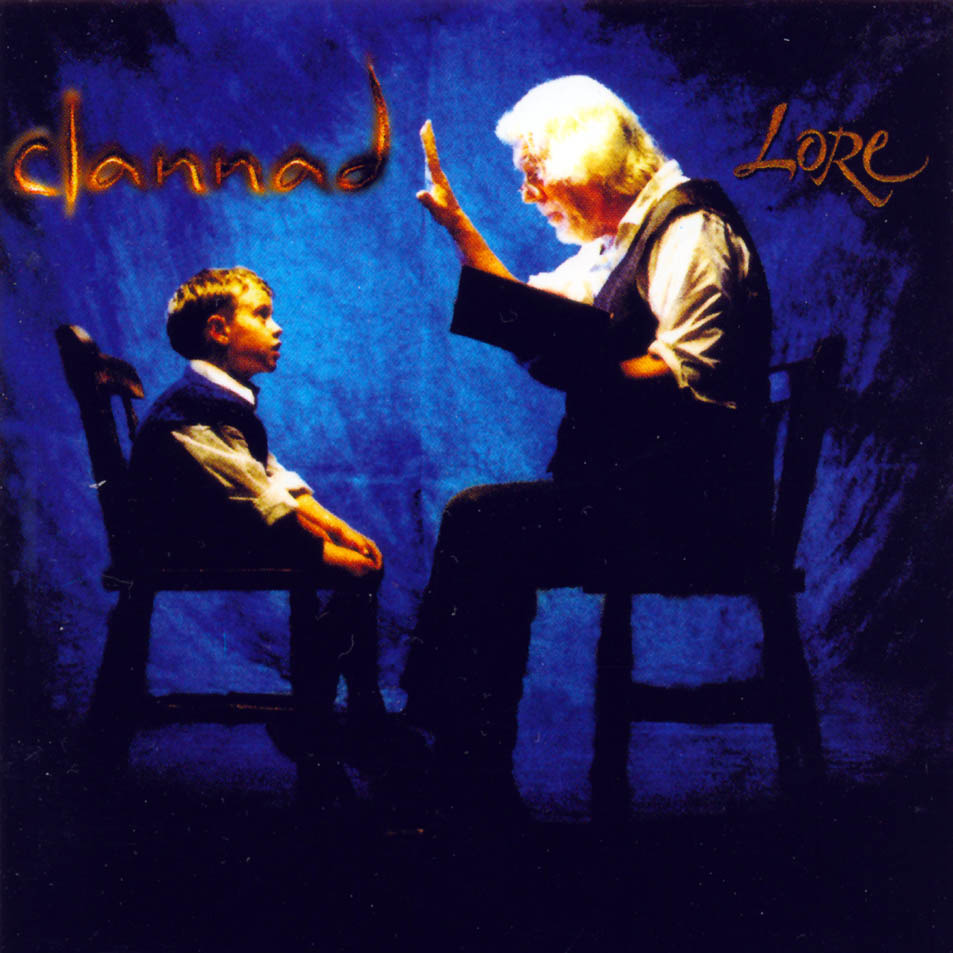
Clannad – Lore
Oh, this is awkward. Clannad is composed of Enya’s sisters and uncles. She even used to sing with them. Was there tension at Christmas that year? Did the Clannad clan survey Enya’s growing collection of New Age Grammy awards on her mantel piece with jealous eyes? “Oh, nice awards, Enya. We wouldn’t know what it’s like to win. Because we didn’t win.”
Desperate to keep the peace, Enya would say something about how, really, they should share the award, as she couldn’t have done it without her family. But it’s no use. They eat their Christmas dinner in stony silence. The crackers go unpulled, and the only sound is that of a gravely ticking clock and the occasional deep intake of breath through resentful nostrils.
Lore is a fine album, by and large, full of haunting yet classy prog folk mood pieces. Immaculate production, gorgeous harmonies, and these Clannad cats can really play! I especially dig the sax playing of Mel Collins, which adds essential colour to some songs that might otherwise have felt a little too murky and muted. But alas, when there is no sax, that’s what we’re left with. A lot of muted murkiness, and at times it feels completely flat. It’s no Enya, that’s for sure.
Were this up against anyone but Enya, then I’ve no doubt that it would have won that coveted New Age Grammy. Don’t worry too much about Clannad. Their day would come before the decade was out. It’s just a shame they were forced to compete with Enya, and that Christmas 1997 was therefore ruined for everyone.
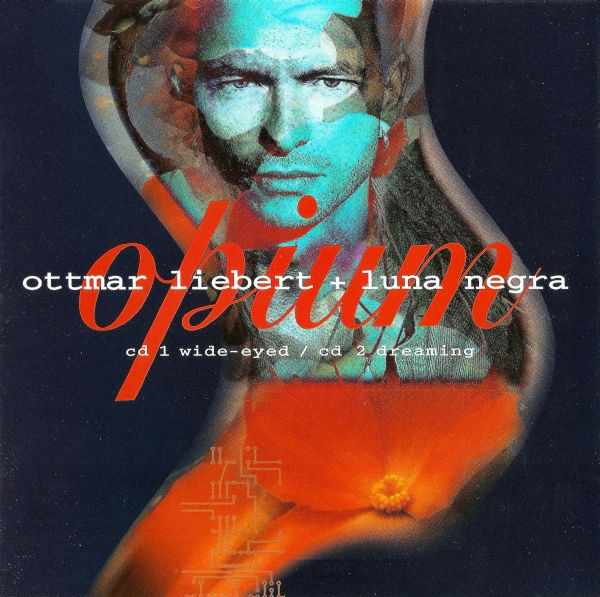
Ottmar Liebert and Luna Negra – Opium
We’ve met these guys before. Ottmar Liebert and his backing band, Luna Negra, were also nominees for the 1994 New Age Grammy. If you recall, Ottmar plays in a controversial “Nouveau Flamenco” style. Quite why this was so controversial, and just who found it to be so controversial, I couldn’t tell you. Scandals and beef are pretty rare in the New Age world. We’ve got to make do with whatever we’ve got.
Opium is a double album. The first half, “Wide-Eyed“, has all the upbeat stuff, and the second half, “Dreaming“, has the dreamier stuff. Alas, the album’s not on any streaming platforms. There is a YouTube playlist, but it’s out of sequence, incomplete, and it seems to incorporate some songs from other albums too.
It’s not bad! The songs from the second, dreamier side seem particularly good. Though I hate to say it, Ottmar, but your guitar playing is the least interesting element of these compositions. He’s an emotive and technically accomplished player, and maybe you’d be able to appreciate what he’s doing here if you’re really into your flamenco. To me, though, his playing sounds no different from the sort of sounds you’d hear on one of those Guitar Moods CDs found in charity shops throughout the land.
The earthy, atmospheric compositions by Luna Negra are much more compelling, even when they incorporate that most dreaded of all New Age sounds, the panpipe.
Ottmar’s sound world is a nice place to visit, but I don’t think I could stomach the full 2+ hour experience. Your mileage, as they say, may vary.

Acoustic Alchemy – Arcanum
We last encountered Acoustic Alchemy as nominees for the 1991 New Age Grammy award, which ultimately went to Mark Isham. And I’ve just noticed that I wrote about that particular punchout almost seven years ago. My word.
I wasn’t too impressed by Acoustic Alchemy last time we visited them. They were nominated for Caravan of Dreams, a gentle acoustic duet. Nice enough, but nothing more. It seems I’m not really too keen on the acoustic guitar as a lead instrument. Sorry, Acoustic Alchemy. Sorry, Ottmar Liebert.
Arcanum, though, is much more expansive. This time, the core duet of Simon James and Nick Webb are backed by a full band, which includes a drummer and a percussionist, and at some points they’re joined by The London Metropolitan Orchestra. So there’s a lot of colour and depth here. It’s tasteful smooth jazz, yes, and there are some tedious moments towards the end. But as the whole thing was recorded live, it has a warmth and an airiness that feels quite rare for this most refined and appropriate of subgenres.
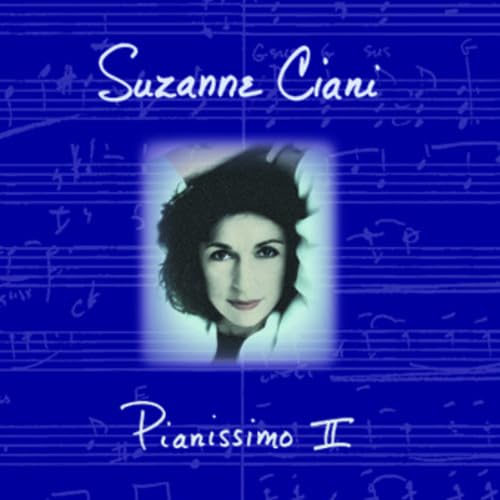
Suzanne Ciani – Pianissimo II
This is in fact Suzanne’s fourth nomination. She lost out to Shadowfax in 1989, to Chip Davis in 1992, and to George Winston in 1996. Having lost out to Enya in 1997, she’d get one further nomination in 2000, but this too would end in disappointment. But don’t feel bad for Suzanne. With five total nominations, she’s basically New Age royalty. Plus, outside of New Age circles she’s rightly recognised as a pioneer of electronic music, a “diva of the diode”, which gives her the sort of credibility of which even Enya could but dream.
This is the second in a trilogy of Pianissimo albums she recorded between 1990 and 2001. The term “pianissimo” means “play this very quietly”, which should give you some idea of what to expect here. Suzanne plays the piano, very quietly indeed.
This is wintry nocturnal music. Melodic, elegant, melancholic. This is world’s apart from the heady improvisations of her legendary Buchla Concerts. But it’s proof that, whenever Suzanne takes to any kind of keyboard, magical things will surely happen.
Just don’t ever – EVER – listen to Terra Mesa if you’re feeling even slightly fragile. My word.
NEXT TIME ON NAGCHAMPA – Michael hedges his bets with the Oracle!

