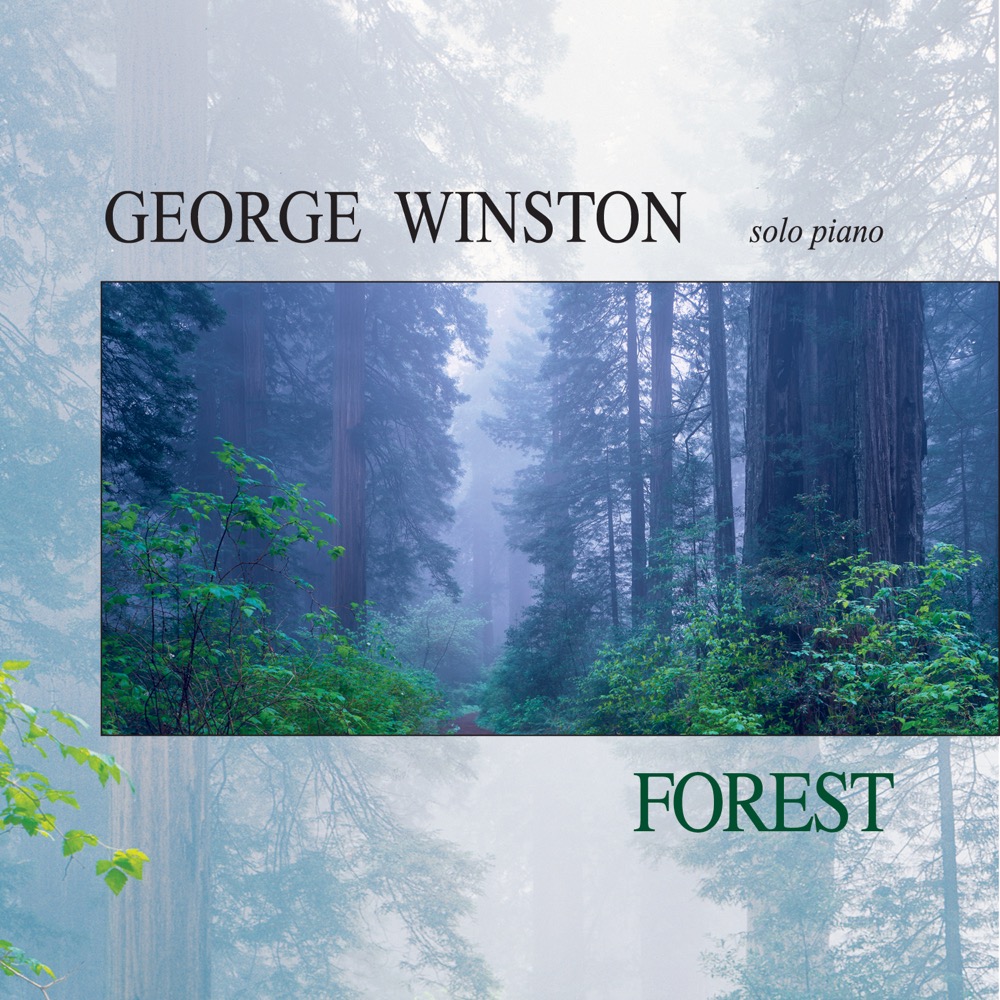
In 1996, Christmas came early for George Winston when he took home the Grammy Award for Best New Age Album.
This is NAGCHAMPA. That’s the New Age Grammy Challenge: Healing Assessments of Musicians Perceived as Awful. I’m listening to every album that ever won, or that was ever nominated for, the Grammy Award for best New Age, Ambient, or Chant album. Originally, I was doing this because I wanted to better understand just what this whole New Age thing is all about. Now I’m doing it because I really enjoy New Age music.
George Otis Winston III, who passed away in 2023, was no stranger to the Grammy Awards. As well as triumphing in the New Age category in 1996, he got a nomination for Best Children’s Music Album (for a collaboration with Meryl Streep!), and one for Best Contemporary Instrumental Album, for a collection of Doors songs reconsidered for solo piano. He looks just like Rufus from Bill & Ted in his Spotify profile picture.
Despite winning the 1996 Grammy Award for Best New Age Album, and despite initially finding success on Windham Hill, George was one of those artists who dismissed the “New Age” label. So how would George have described his music?
George claimed that he always played in one of three styles: A New Orleans R&B kind of thing; a Fats Walleresque “stride piano”; and a melodic style of his own which he described as “rural folk piano”. He dabbles in all three styles throughout Forest, the album which won him his Grammy. But he mostly seems to stick to that “rural folk” sound. And what an evocative and affecting sound it is. Apparently, George first became interested in playing the piano having heard Vince Guaraldi’s soundtrack for A Charlie Brown Christmas. It shows; not just in his uplifting lyrical style, but also in just how Christmassy much of his work seems to be.
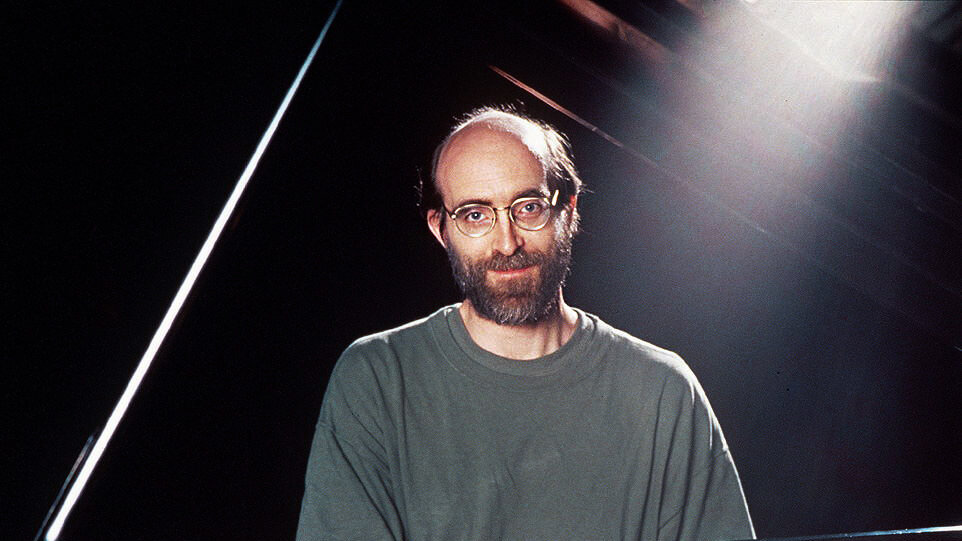
I find that solo piano albums can go either way. Not everyone’s Oscar Peterson or Dave Brubeck. But luckily, George has a few tricks up his sleeve to keep things varied and engaging. For instance, towards the end of Tamarack Pines, we hear his “hollowed” technique: He reaches inside the piano and mutes strings with one hand, while hitting the keys with the other. It results in an insistent tapping noise, as if a judgemental bird’s just landed on his piano and proceeded to peck at the wood.
In this same track, he also treats us to that old trick of the descending notes to evoke falling leaves, which so enthralled Saxondale when Eno used it to “paint a picture with sound”. Except, this piece is about pines, from which leaves will never fall. So is each stab of a piano key meant to represent an individual pine needle? Is this what it would sound like if a pine tree played the piano?
In Forbidden Forest, he seems to pluck the piano strings directly to create resonant bass notes. Or at least, I assume he’s doing this. This is supposed to be a solo piano album. And you don’t play other instruments on a solo piano album, do you?
Most of the songs are pretty brief, and George delves into a number of different styles. Troubadour is chilled and jazzy, and according to the liner notes, it’s a John Barry composition that originally featured as the b-side to Goldfinger. Cloudy This Morning has the serious and studious feel of something that might have come out on ECM. A couple of pieces last for less than a minute each, like brief melancholic flashbacks in a film. And on Graceful Ghost, he swings. This spectre isn’t just graceful. He’s classy, and partial to an elaborate cocktail with an off-putting name.
Then comes the reason why I had to wait until December to listen to this one. George plays three pieces from The Snowman: Walking in the Air, Building the Snowman, and The Snowman’s Music Box Dance. I know this music well, and it’s potent enough to destroy me. I can just see Bowie’s face, and that slight smile when he says “a real snowman.” These are, of course, solo piano versions of these pieces, so if anything they’re even more affecting than the orchestral versions you get when watching the full film. George, you have killed me.
George’s version of Walking in the Air also incorporates snippets from Andreas Vollenweider’ Down to the Moon album, which happened to win the very first New Age Grammy. You’re not helping matters if you don’t want to be thought of as a New Age artist, George! It also features a couple of motifs from the soundtrack to The Outer Limits. For some reason. These unorthodox shout-outs do not dispel the magical mood, and for us seasoned Snowman fans, it certainly makes a change from Aled Jones.
As an aside, though: The Snowman is very touching, but I find it emotionally devastating for reasons that have nothing to do with the story. Yes, he melts at the end. But he always comes back! Canonically! As Father Christmas puts it: “I see you made it again. The party I mean, not the snowman.”
The sequel, The Snowman and The Snowdog, is much more of a gut punch. Yet that too manages a happy ending, despite the melting. Who knew that the former drummer from Razorlight would be capable of destroying me at least once a year.
Anyway. Sorry George. We were talking about your Grammy Award winning album, weren’t we.
The final few tracks on Forest sound lovely enough. Love Song to a Ballerina is a Mark Isham song, so here we have yet another nod to a former New Age Grammy winner! And we also get a traditional Japanese lullaby, which is even more haunting than that Graceful Ghost who paid a visit a few songs ago. And the final track, Night Sky, is a slow piece with sizeable gaps between the notes that create a sense of peaceful yet poignant stillness. Just wonderful. But alas, I don’t think I was paying much attention. I just couldn’t. Not after the music that preceded all this.
Unfortunately, Forest peaks with The Snowman suite. It’s not George’s fault. That music just means quite a lot to me, and when I listen to it at this time of year, something inside boils over. It’s a blessing and a curse for the album. A blessing, in that it means that this one’s affected me more than any other album I’ve visited as part of this NAGCHAMPA challenge. A curse, because it means that I will only ever listen to this album in December.
Forest may enter my festive canon. But that just means that I’ll treat this differently from other music. It’s not lesser, nor greater. It’s just different. It’s Christmas music, which means it has a certain weight to it. And depending on my mood, this may be an unfair weight to place on any piece of music.
Other albums nominated for the 1996 New Age Grammy:
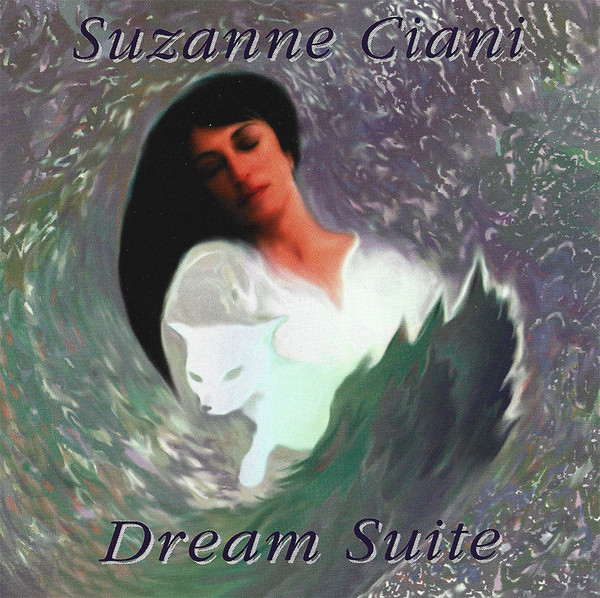
Suzanne Ciani – Dream Suite
This was the third New Age Grammy nomination for Suzanne. Her Neverland album was nominated in 1989, and Hotel Luna was nominated in 1992.
With her Buchla concerts/demonstrations in the 60s and 70s, Suzanne is a synth pioneer, something that seems to give her a lot more contemporary credibility than other New Age artists. Which other New Age Grammy nominees could hope to collaborate with Kaitlyn Aurelia Smith as part of the FRKWYS series? Plus, Finders Keepers recently reissued some of her concerts, describing them as “an archival project that not only redefines musical history but boasts genuine claim to the overused buzzwords such as pioneering, maverick, experimental, groundbreaking and esoteric, while questioning social politics and the evolution of music technology as we’ve come to understand it.”
But whenever Suzanne was nominated for a Grammy, it always seemed to be for a piano-based piece rather than a synth exploration. Dream Suite features Suzanne’s melodic piano with lush backing from the Young Russian Orchestra. And pleasingly, each piece seems to interpret an actual dream as experienced either by Suzanne, or by someone she knows. Over the course of the album there’s a meeting with Mozart, an encounter with a pink zebra, and a reverie from someone who really digs lime marmalade.
It’s not all fun and games though. There’s also Eulogy to a Surfer, about a friend of Suzanne’s fiancé who was shot and killed in San Francisco. He was a surfer, and this piece imagines him happily “riding heaven’s wave” for all eternity. I’m not crying. It’s the ocean spray. That’s right: The ocean spray.
And I’ve just noticed that Suzanne’s regarding a dream cat on the cover. What a heroine she is: To cats, dreamers, synth nerds, and surfers everywhere.
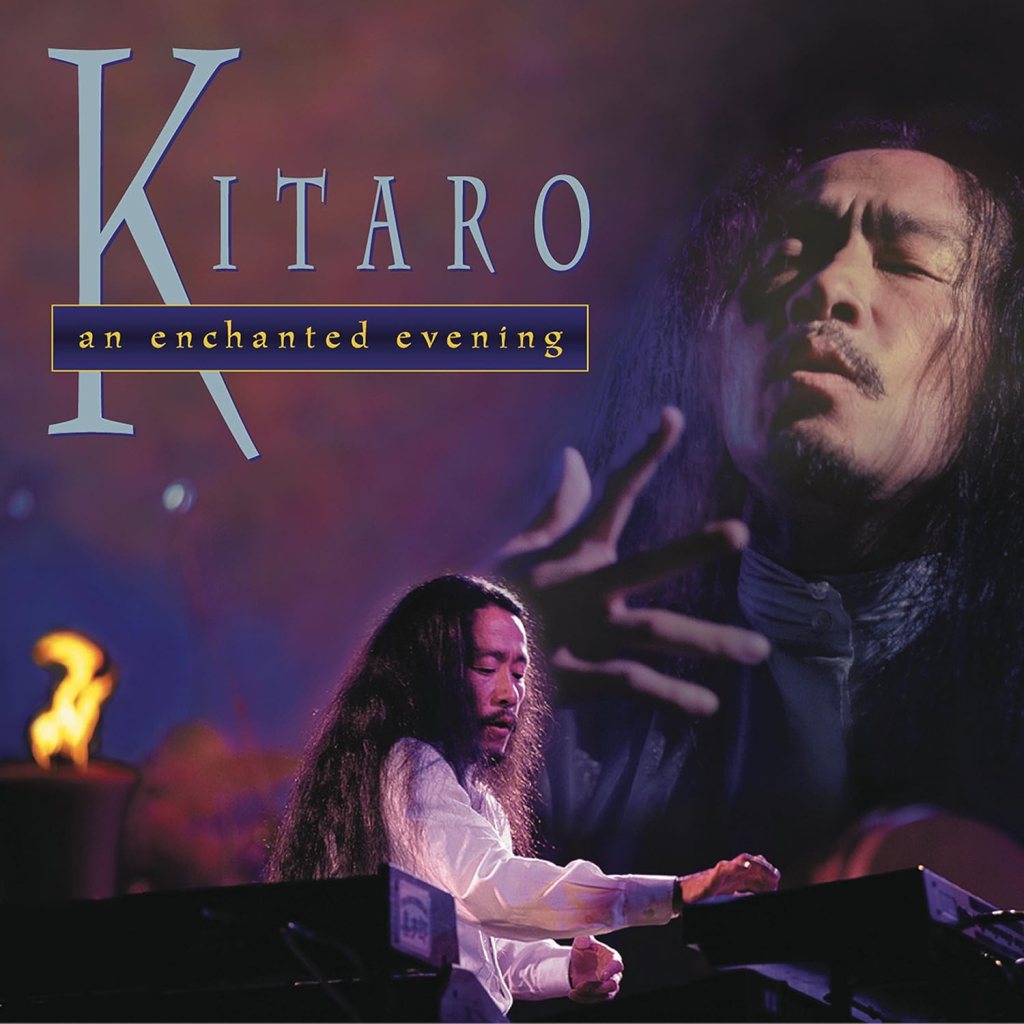
Kitarō – An Enchanted Evening
Another familiar face. 1996 saw Kitarō get his fourth nomination for the New Age Grammy. Kitarō now holds the record for most nominations in this category, though he’d only win once. But that victory would not come until 2001, and we’re still chilling in 1996 here. So until then, let’s spend An Enchanted Evening together, hey?
An Enchanted Evening is in fact a live album, and many of its tracks come from Mandala, for which Kitarō received a New Age Grammy nomination in 1995. It must have been frustrating for him, to get a nomination for essentially the same music two years in a row, only to miss out on the award each time.
I found Mandala sonically pleasing if spiritually underwhelming. I had previously described it as like being “sat in a cavernous auditorium watching a laser light show while a serious clown does something daring with plates onstage.” Well, hearing live renditions of this music only adds to this feeling. It’s widescreen bombastic music more suited for a Cirque du Soleil performance than a vision quest.
You can watch the whole concert on YouTube. Judging by some of the comments, some of those who were actually at these shows did feel like they were floating several feet above their seats as they watched the performance. Transcendence is there, if you’re on the right wavelength. So what do I know.
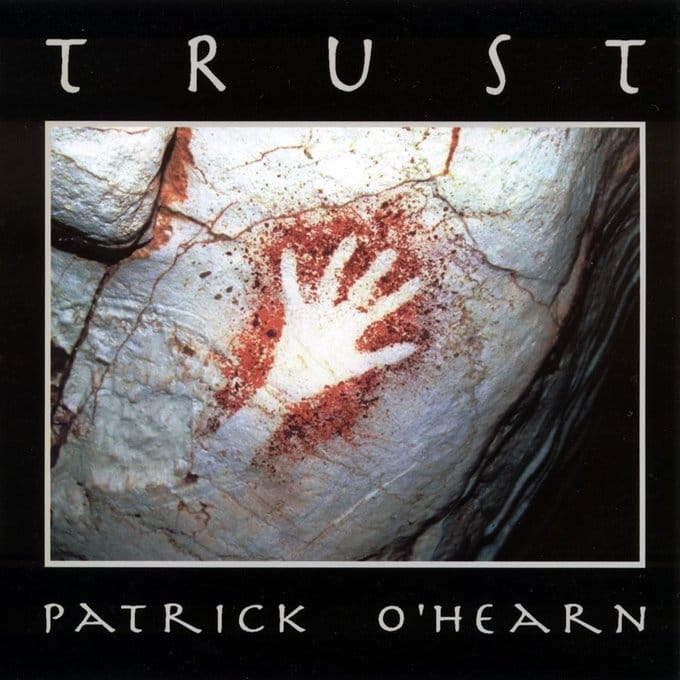
Patrick O’Hearn – Trust
Patrick used to play bass for Zappa, who let him experiment with his collection of synthesisers. Imagine being invited to experiment with Zappa’s synths. It would be like Christmas for wizards.
So we have Zappa to thank for Trust, a synth-heavy album which actually marks Patrick’s second New Age Grammy nomination. His album Between Two Worlds was nominated way back in 1988. Alas, after 1996, he would never be nominated again.
Trust is a collection of moody and mysterious ambient synth pieces, with occasional textural guitar contributions from the great David Torn (check out his Cloud About Mercury album, with Mark Isham, Tony Levin, and Bill Bruford!). Sometimes it sounds like a Vangelis soundtrack to a film about Viking scientists. Other times it sounds like the music that might accompany an immersive museum exhibition about fossils in the early 90s. It would be called Discovery Quest X.
The cover shows a hand print from France’s Cousquer Cave, which is thought to date from around 12,000 BC. Does this suggest that Patrick was aiming to create music for the ages, an artistic statement that people would still dig some 14,000 years from now? History will decide. But whatever happens over the next dozen millennia, these are exactly the sort of sounds I want to hear today.
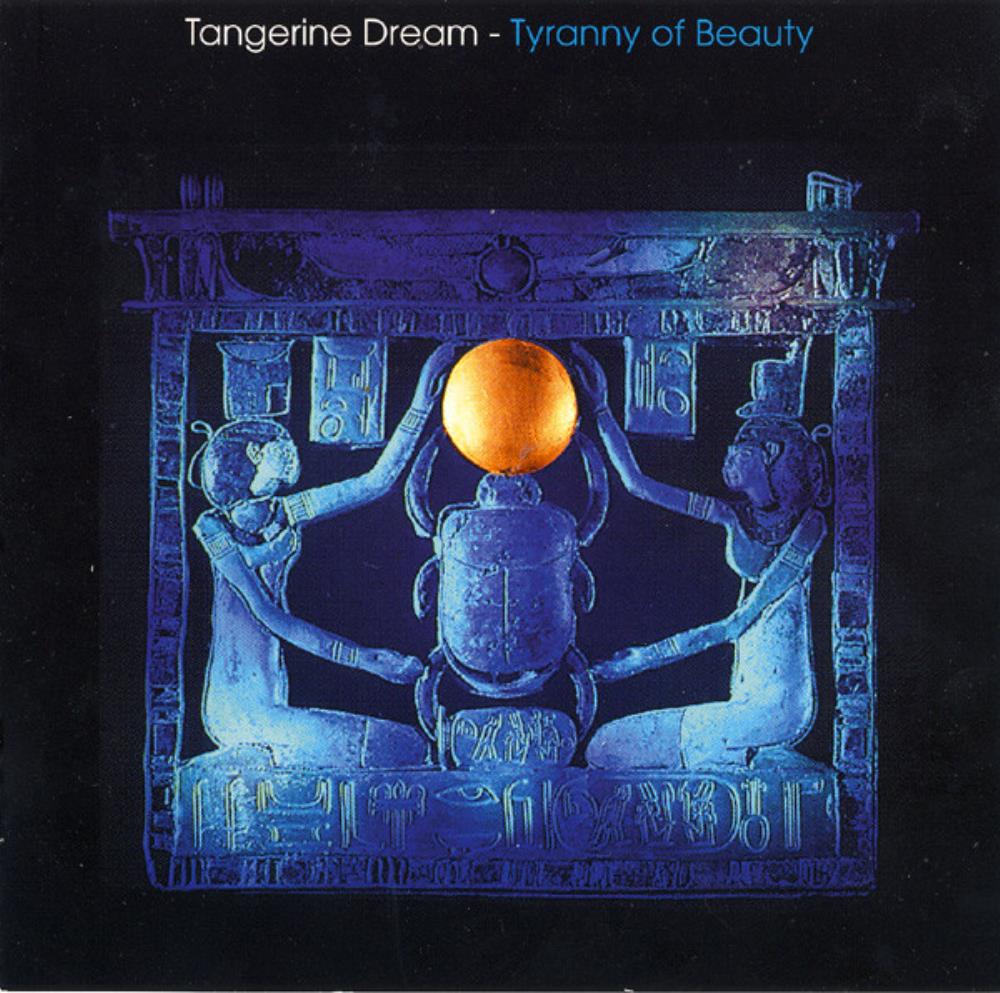
Tangerine Dream – Tyranny of Beauty
It just wouldn’t be a New Age Grammy roundup without a Tangerine Dream album. They would get a nomination each year between 1992 and 1996. But after this year, they would never get nominated again. I’m going to miss them.
Tyranny of Beauty is the group’s 23rd studio album, and 51st release overall (accounting for soundtracks, live albums, and compilations). It features, at its core, the father and son team of Edgar and Jerome Froese, with horn accompaniment from Linda Spa, and occasional guitars from Gerald Gradwohl and Mark Hornby.
If you’ve heard any 90s Tangerine Dream, then you’ll know exactly what to expect: Synth arpeggios, anthemic keyboard riffs, keening guitars, and a relentless light techno pulse. Not bad. I’m afraid that’s all I can say about it. It’s not bad. Don’t get me wrong: This is perfectly listenable ambient techno. It’s just that, when I hear this and remind myself that this is technically the same group that gave us Phaedra, then I can’t help but feel underwhelmed.
More exciting than the music is the discovery that the group produced a CD-ROM version of this album. It came free with a 1995 issue of New Age and New Sounds magazine. Imagine getting a free Tangerine Dream CD-ROM with your dedicated New Age periodical. I believe I’d find that even more exciting than being invited by Zappa to fiddle with his synths.
NEXT TIME ON NAGCHAMPA: Enya! More Suzanne Ciani! Clannad!
 Lord Gloom