So mechanical and repetitive that it’s inhuman and unholy.
Upbeat, up tempo, and familiar, to distract from the pain and tedium of cardiovascular exercise.
The music they play in my gym is none of these things. I could write multiple paragraphs about how much I hate it, but I’m not quite at my “yelling at cloud” stage of life yet. Suffice to say: You know your playlist is in bad shape when G**rg* *zr** is a highlight.
But whatever. I can blank that out and listen to my own stuff. What I can’t ignore, though, are the videos that accompany these songs. There are TVs everywhere. Even if you don’t actively watch them, there they are. You’re going to notice them.
And notice them I have. And I’ve noticed that the various music videos they play in my gym fit into one of five categories.
Let’s explore these categories, together. I’ll list them in order of preference, from those I can tolerate (and even, sometimes, admire!) to those which, as music videos, are about as engaging as CCTV footage of the Winnersh branch of Allied Carpets on a drizzly Saturday afternoon in 1992.
I shall not be embedding any videos, soz. This is because I have no idea who’s responsible for most of the inanities that make it to the gym playlist. I could seek them out, but such behaviour could get me blackballed from the Drones Club.
Before things got quite so bad as they are now, bands used to put DVDs out.
Mostly these would feature a recording of a live performance. But sometimes they were collections of music videos, or even specially-made “behind the music” documentaries. The best music DVDs contained a combination of the above.
Each DVD is a time capsule of an era that was very similar to our own, but also profoundly different. This is the era just before the mass adoption of smartphones, and before social media made everyone and everything significantly worse.
Once you meet me, it’s only a matter of time before I try and make you a mix CD.
I still make mix CDs.
These days I only ever make mix CDs for other people. I used to make them for myself. I got my first MP3 player long after everyone else had got one, and I used it long after everyone else had moved on to streaming on smartphones. But before that, I made myself a lot of CDs.
It was my travelling music. I’d travel everywhere with a portable CD player (is that what we called them? Or was it a personal CD player?) and a wallet full of my own mixes.
I had a CD for every conceivable journey and every conceivable mood. I also had a reserve of CDs that I’d turn to when I couldn’t decide what else to listen to.
I followed certain rules when making these CDs – unconsciously at first, but they soon became very important indeed. And I realise that I still follow these rules when I’m making CDs for other people.
I also follow these rules when I’m putting playlists together. To some extent.
Let’s talk about the rules for making a good mix CD, together.
It was my l*ckd*wn project to listen to every single album from this book. And that’s the first and last time I’ll ever reference this atrocity of a year on this site.
Reader, I managed it. Shall I tell you what I thought?
The book was a gift, and I was interested in getting it because I wanted to hear some more music from before 1960.
The pre-1960 entries were wonderful. But if devouring this doorstop tome has taught me anything, it’s that, as far as I’m concerned, the 1960s were the best decade for music. By far. It’s not even close.
I enjoyed every single album from the 60s, and most of the albums from the 70s. But by the time I got to 1977 or so, things suddenly got a lot less friendly. Punk arrived, you see.
Things got even worse in the 80s, as the authors got preoccupied with hardcore punk (which is even more depressing than first-wave punk). Then things got genuinely unpleasant in the early 90s with the arrival of gangsta rap and g-funk.
There was good stuff throughout, of course. But the 60s offered wall-to-wall joy. Even the more challenging albums from this decade seemed imbued with warmth and optimism. And it often occurred to me that all music from 1970 onward owed a tremendous debt to this blessed decade. Even the stuff made by musicians suspicious or disdainful of the 60s wouldn’t exist without the musical miracles achieved in the 60s. After all, the 60s gave these cynical discontents something to rail against!
The book in question. Prince is on the back cover!
Moan, Moan, Moan
The selection of 1,001 albums is about as diverse a selection of albums as you could hope for. Though the selection’s strongly biased towards the west (and it’s obviously written from an American perspective), you can tell that the authors tried very, very hard to be as inclusive as possible.
Immersing myself in this book was an immensely rewarding experience. I heard many albums I simply would not have heard otherwise. Even better, I heard many things that I might previously have overlooked or written-off completely. In short, I’ve had a lovely time. Hundreds of hours of mind-expanding diversion. I couldn’t be happier.
But…
The blurb says that this book contains “inside knowledge and criticism from 90 internationally acclaimed music critics”. I’ve suspected for a while that you simply cannot be a professional music critic without also being a complete and utter melt. This book has given further evidence for my case.
Some of the entries are so dripping with disdain it’s baffling. Isn’t this meant to be a celebration of music? Then why the weird contempt for certain genres? Despite including two albums by My Bloody Valentine and one by Ride, shoegaze (or, as the book terms it, “shoe-gaze”) gets a lot of stick. And emo isn’t my thing. Never has been. But is the otherwise glowing review of Arcade Fire’s Funeral really the best place to write off the entire genre as “illiterate, self-indulgent, angst-ridden garbage”?
Elsewhere, British rap music is dismissed as an “unfortunate contradiction”. The writer doesn’t expand on this. They apparently assume we’ll nod along gravely. Hey ho. But if it’s an “unfortunate contradiction” that British people should wish to rap, why include, in your book, albums by Massive Attack, Tricky, Skepta, Dizzee Rascal and (hahaha) Happy Mondays and The Stereo MCs?
Plus, many assertions made throughout the book are simply wrong. For some reason, the entire entry on Suede’s Dog Man Star is dedicated to extolling the virtues of guitarist Richard Oakes, even though he had nothing whatsoever to do with the album’s recording. The title of The Arctic Monkeys’ debut album is said to be a quote from Billy Liar. It’s not. It’s a quote from Saturday Night and Sunday Morning. Sun It Rises by Fleet Foxes is said to be acapella. I don’t think they know what that word means. Kanye’s Beautiful Dark Twisted Fantasy is said to have “a notable absence of hokey skits and gimmicks”. So did I just hallucinate that interminable Chris Rock monologue about genitals?
Nitpicking? Maybe. But I only noticed these errors because I’m intimately familiar with the music in question. So who knows what other blatant falsehoods are hiding in the book?
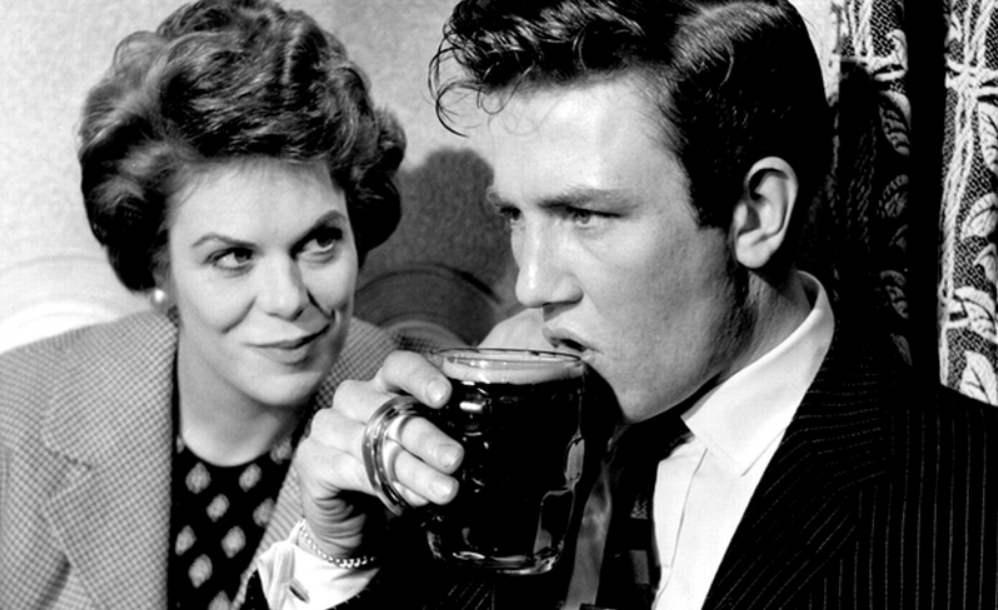
Albert Finney in Saturday Night and Sunday Morning (1961). “Whatever people say I am, that’s what I’m not.”
But What About….??!?!?
It’s inevitable that anyone reading this thing will think of countless albums the authors should have included. So let me list some of the omissions that annoyed me!
Jazz
Jazz features heavily in the 50s and the 60s, but very little beyond 1973 or so. Miles has a lot of entries, but John Coltrane and Charles Mingus only have one entry each. No albums are featured by Alice Coltrane, Sun Ra, Pharaoh Sanders, Art Blakey, The Art Ensemble of Chicago, Rahsaan Roland Kirk, Don Cherry, and Ornette Coleman’s only represented by an album of John Zorn covers.
Plus, Thundercat is the only representative of the new guard. Kamasi Washington, Robert Glasper, Badbadnotgood, Comet is Coming – nowhere to be seen!
Hip Hop
Admittedly, this isn’t really my cup of tea. But as I struggled through the seemingly endless collection of miserable gangsta rap albums, I couldn’t help but notice the absence of Souls of Mischief and Digable Planets. And I know the writers make their contempt for British rap clear. Still, they seem to respect The Mercury Music Prize, so I would have expected to see Young Fathers, Dave and Stormzy.
Electronic
Kraftwerk and Gary Numan are there, of course. There are a few techno, big beat and drum and bass albums featured in the 1990s section, and Mylo, Justice and The Avalanches are featured in the 2000s section. It’s a little surprising that they only feature one Daft Punk album (Homework) given how gargantuan and influential they proved to be.
IDM doesn’t get a look-in. It’s an unfortunate name for a subgenre that makes me cringe every time I encounter it. But the likes of Aphex Twin, Autechre, Squarepusher, Plastikman, Drexciya and Photek turned music inside out. They made music so out-there, so heady yet immediate, that to listen to it provides what feels like a deep tissue massage for your grey matter. But apparently, none of this music is really worth listening to. Hm!
Also notable by their absence: Four Tet, Gas (or anything from Kompakt), The Knife (I mean, really!), and, perhaps most shocking of all, Flying Lotus. And speaking of influential subgenres that might as well not exist as far as this book’s concerned – could they not even throw in a token vaporwave album?
Ambient
There are two ambient albums in the whole book. Two. One’s by Brian Eno, of course. The other’s by Aphex Twin. Yes, he’s included. But he’s included for one of his ambient experiments rather than for his mind-melting unclassifiable genius. And of the two ambient collections he’s put out, Volume 2 is profoundly superior to Volume 1. This book goes for Volume 1. I repeat: Hm!
And that’s it for ambient music. Nothing by The Orb, Biosphere, Stars of the Lid, William Basinksi, and so on, and so forth. And while I note the absence of Susumu Yokota, might I also point out that there isn’t a single album from East Asia in the whole book?
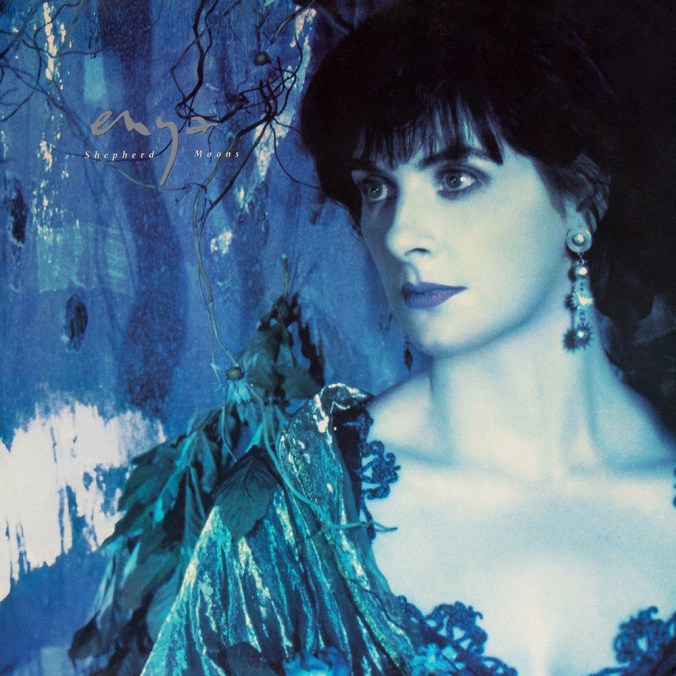
Plus, there’s not a single new age album in the whole thing. Not one. I know it’s a much-maligned genre. But how about a begrudging shout-out for Enya? Or some kudos for Laraaji, if the authors want to retain their credibility?
Reggae
You barely need two hands to count the number of reggae albums in the book. The selection’s limited to The Wailers (three albums by Bob, one by Pete), Burning Spear, UB40, and Finlay Quaye. There’s not a single dub album. I thought that certain albums by Lee Perry, The Upsetters, The Congos, Black Uhuru, Mad Professor, The Scientist, Augustus Pablo and King Tubby were canonical. Apparently not!
Metal etc.
Reading this book, you’d think that the only style of metal is thrash metal. Worse, you’d think that there’s been no good metal since nu-metal. Worse still, you’d think that nu-metal was actually worth listening to. Yes, the last HEAVY album included is Slipknot’s debut. So all the visionaries who’ve redefined what’s possible with LOUD guitars since 1999 may as well not have bothered. Never mind, Mastodon, Opeth, Deftones, Deafheaven, Boris, Sunn O))), Wolves in the Throne Room, Tool, and the rest, and the rest.
Incidentally – According to this book, one heavy album that you apparently must listen to before you die is Kid Rock’s Devil Without a Cause. And that album’s inclusion is the reason why I’ve only listened to 1,000 of the 1,001 albums listed!
“Indie” (For want of a better word)
The more I think about it, the more I realise that it’s a good job I didn’t put this book together. Because if I did, I would have filled it with bands who have enriched my life these past 20 years, such as Grandaddy, Broken Social Scene, Neutral Milk Hotel, Godspeed You! Black Emperor, Modest Mouse, My Morning Jacket, Bat for Lashes, Band of Horses, Interpol, Low, Snow Patrol, Keane, Starsailor, Explosions in the Sky, The National, Black Rebel Motorcycle Club, The Cooper Temple Clause, Franz Ferdinand, The Libertines, Clinic, The Coral, The Beta Band, and the rest.
I’m not surprised that some of those weren’t featured. But I’m very surprised that there wasn’t a single album by GY!BE, The National, My Morning Jacket, Modest Mouse, or Low. And I’m particularly surprised that they didn’t feature In the Aeroplane Over the Sea. Again, I thought such albums were canonical. Once more: Hm!
Other Omissions
Finally, there are some artists who have albums included in the book, but not necessarily the ones I’d expect to see. None of Scott Walker’s latterday devastating nightmares feature. Nor do any of Kate Bush’s releases this millennium. Bjork has three albums featured (four if you count The Sugarcubes), but not Post or Homogenic. Apart from Junkyard by The Birthday Party, none of Nick Cave’s 80s work is included. Tender Prey would be my pick for his finest album, and Your Funeral, My Trial is almost as essential as The Firstborn is Dead. There are two Bee Gees albums included, and neither of these albums is their soundtrack to Saturday Night Fever.
One oversight, though, is simply unforgivable: Mezzanine by Massive Attack. I wouldn’t mind, considering their first two albums are included. But if it was a question of space, there are at least two of the albums from 1998 that they might have replaced with Massive Attack’s masterpiece. One is that aforementioned Kid Rock atrocity. The other is a Bob Dylan live album recorded in 1966. As “important” as this performance undoubtedly was, are these guys really going to pretend that one of the best albums of 1998 was actually recorded in 1966? And are they going to do this while also including Kid Rock and excluding Massive Attack? And are they going to do all of this with a straight face, yeah?
Pictured: An unforgivable oversight.
You Can’t Please Everyone
And we all like to moan now and then.
For what the book is, it’s excellent. And I repeat – it’s provided hundreds of hours of mind- and horizon-expanding joy through some hopeless months. I guess it’s folly to try and compile a “definitive” list of essential albums from 50+ years of musical history. Oversights are inevitable. And most are forgivable!
But my real goal in listening to all of these albums was to create THE ULTIMATE PLAYLIST.
I now have a Spotify playlist featuring one song from every album featured in this book.
Sort of.
You see, creating this playlist provided me with an opportunity to right some wrongs. I made certain substitutions throughout. Some of these were necessary, when the album featured in the book wasn’t on Spotify. Other substitutions were made to make the playlist that little bit more enjoyable. For example, I prefer Roam by The B52s over anything from their debut, and There Must Be An Angel by The Eurythmics over anything from their debut. Plus, I didn’t want a Christmas song in my playlist, so I included a non-festive song by The Ronettes in place of something from Phil Spector’s Christmas Gift.
But some of my substitutions were merciless. I’m sorry, but I cannot stand Eminem or The Arctic Monkeys. Kanye’s Yeezus was a hideous chore. It’s a total joke that they included Django Django’s debut without including a single album by The Beta Band. And I really, really, really didn’t want to listen to that darn Kid Rock album.
I went rogue once, and only once, through replacing Kid-effin-Rock with a track from the real best album of 1998 – Mezzanine. So instead of hearing Kid Rock bark about being a cowboy, we now have Horace Andy lamenting his antisocial neighbour. It’s what Jesus would have wanted.
I won’t lie to you – not every song on this playlist is a winner. But such is the glorious scope of the book that there really is something for everyone. And you can rest-assured that, if you don’t like one track, you’ll probably like the next one.
Listen to it in sequence and you can track the gradual evolution of pop music from Frank Sinatra to Hookworms. But listen to it on shuffle and you’ll have a 72 hour mix of rock, pop, jazz, funk, punk, blues, soul, disco, hip-hop, trip-hop, electro, big beat, techno, grime, grunge, UK garage, US garage, psych, prog, country, folk, soft rock, hard rock, hardcore, grindcore, Britpop, post-punk, post-rock, post-hardcore, acid rock, acid jazz, acid house, both kinds of R’n’B, and beautiful lashings of glamorous indie rock’n’roll.
The best place to start is track 705, which lays down this truth:
Today on this program you will hear gospel, And rhythm and blues and jazz. All those are just labels. We know that music is music.
And that’s why, for all its many, many, many faults, this book wins. Because it proves that music is music.
Throughout October, I like to listen to dark, macabre, spooky and fun music. Throughout December, I listen religiously to Christmas music.
In the gap between these two periods, I’m drawn to music that matches the weightiness of the season.
There’s no simple way to describe this music. It’s laddish yet sensitive post-Britpop indie rock defined by its plaintive vocals and “anthemic” choruses, performed by earnest young British or Irish men with nice shirts and mid-length hair. The cool kids, who are wrong about everything, used to call it “bedwetter music”. This is only because they’re terrified of their feelings. I have a better term: Music for a cry and a pint.
Context is everything. When I say “a cry and a pint”, please don’t picture anything solitary – a drink nursed over the course of an hour by a sad individual in the corner of a pub. No, I want you to picture something that’s almost the opposite: A pint held aloft, one of many thousands held aloft in the same room or field. Holding the pint aloft, a noble individual, basking in the raw emotion of the music, elated by the sense of community, feeling like a part of something bigger than themselves yet, at the same time, feeling at one with their feelings. And for this individual, to feel at one with their feelings is a rare feeling indeed.
Music for a cry and a pint is music that’s designed to be bellowed along to by crowds who want something emotional yet comforting. This is music to be sung in the summer by sozzled and sunburned festival crowds. But it’s perfect for this time of year too, when the days are short and cold and things are getting critical.
Let’s explore some of the best music for a cry and a pint, together. For each song, I’m going to highlight the Bit to Bellow Along To With a Pint (BTBATWAP). And to best evoke the unselfconscious abandon that surges through normally-reserved crowds when the beer flows and the song reaches its peak, I’ll be writing these sections ENTIRELY IN CAPITALS.
It’s usually the chorus. It’s always the chorus.
But these songs are by no means the finest songs by each respective band. So in each case, I’ll also highlight another song from the same band, from the same album – one that offers slightly subtler catharsis. Perhaps one for that solitary pint and cry. One to take home with you, then, to treasure when the roar of the crowd has faded to a painful, distant memory.
UPDATE: I have now created a 50-song playlist for a cry and a pint:
Yet it’s also a quest for the best. I just want to hear some really good new age music.
But you’ve got to take the good with the bad. If you want to understand what makes for a good film, you’ve got to watch Ghostbusters (1984) AND Ghostbusters (2016). You’ve got to watch A New Hope AND The Last Jedi. It’s not enough to explore the glittering towers of the crystal heights. You’ve got to wade into the potent swamps too, areas where the air’s so thick with searing pungent vapours your eyeballs curdle and your tears cake and rot in their ducts.
So I decided to listen to the worst new age music ever made.
Rate Your Music is a site that allows people to rate their music. Through allowing people to rate their music, the site’s developed an extensive database of consensus that you can organise in any way you see fit. In this way, it’s possible to see the albums the Rate Your Music community agrees to be the worst new age albums ever recorded.
I was looking for new age music, and I found it. Lots of it. All part of the Jamendo Albums Collection.
There are more than 50,000 albums in this collection. The majority of them look perfectly innocuous. Amid the innocuous is lots of promising new age music. But also lots that looks simply bizarre: Inadvisable and not at all safe for work.
Trawling through the collection, I found myself saving links to stuff that stood out. And these links have been stacked in my OneTab for 18 months. Since May 2019, every time I’ve “hit the net” I’ve been greeted with a wall of text that says things like NATIONAL FUNKY BITCH and THE 666 X MURDER PROJECT.
It’s finally time to purge these demons. Let’s jump down this rabbit hole together, shall we? See how deep it goes.
This is my first ever blog that could be tagged NSFW. You may be added to a list.
The battle for the 1993 New Age Grammy was a real clash of the titans. Only New Age heavyweights need apply.
IN THE RED CORNER: Looking to SAIL AWAY with a well-earned gong, it’s the Celtic banríon; the queen of our hearts, our minds, and our souls. It’s ENYA.
IN THE BLUE CORNER: He’s Masanori Takahashi to his parents. But to you and I, he’s the man of love and joy himself, he’s KITARO.
IN THE YELLOW CORNER: They dream in orange. They dream in German. Tonight, they dream of victory. You’ve had this dream before. It’s the mighty TANGERINE DREAM.
IN THE MAUVE CORNER (for this battle’s taking place in a pentagonal ring): Is he finally ready to burst forth from his Chryssomallis? It’s YANNI, ya’know?
Picture those five New Age prizefighters, primed by their New Age coaches in their colourful corners. A beaming woman walks into the centre of the five-sided ring, holding a sign aloft. On the sign is a number. The number is one. She’s followed by a grizzled salt-and-pepper ex-sailor in a striped shirt. He turns to each corner in turn, making eye contact with every contender, gruffly demanding a good, clean fight. A bell rings. Our five peaceful fighters rush into the middle. Five potent powderkegs holding five flaming matches. When they meet in the middle, the universe swallows its tongue.
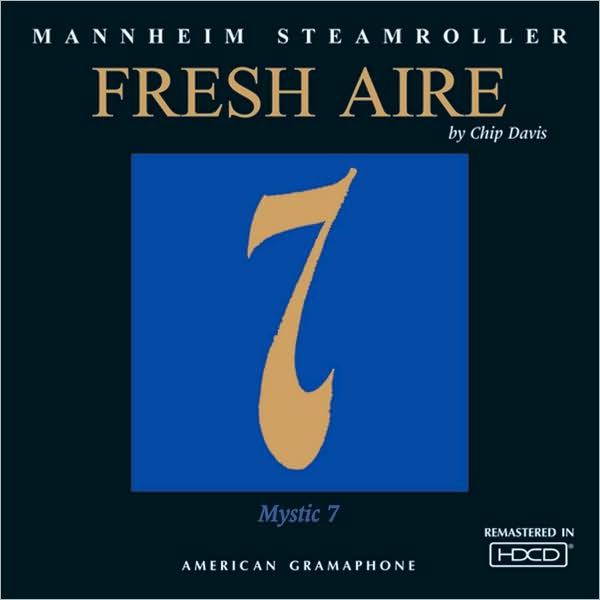
The 1992 New Age Grammy went to Chip Davis and his Mannheim Steamroller group. Fresh Aire 7 is a concept album about the number seven. It’s well naff.
When you take a deep dive into an unfamiliar music genre, you discover entire worlds you never knew existed. Up until a few weeks ago, I’d never heard of Mannheim Steamroller. But it turns out they’re quite a big deal. They’ve released more than 70 albums, and people seem to go nuts for them. Nine of their albums went Gold, three went Platinum, and four went multi-Platinum. What the ‘ell?!
I first met them during the 1991 Grammy Awards, when their Yellowstone album got a nomination for the New Age gong. I described that collection as “pure Disneyland”, but not necessarily new age. But in listening to it, I discovered Mannheim Steamroller’s formidable back catalogue, which I was delighted to find contained a number of Halloween albums.
Of course, I listened to the first in their Halloween series. 23 tracks, “deranged by Chip Davis”! It’s a strong contender for the strangest album I’ve ever heard. The first half contains a number of seasonally-appropriate classical compositions arranged for affordable synths. Toccata in de Mole, The Hall of the Mountain King, The Sorcerer’s Apprentice, Night on Bald Mountain – that sort of thing. None of them sound particularly good. It’s certainly unnerving, but not necessarily in the way they intended. It’s uncanny, like a robot humming to itself in the oil shower. But halfway through its mammoth 90 minute run-time, the album transforms into one of those Halloween sound effects records. There’s over 40 minutes of creepy ambiance that includes a long spell spent on an alien spaceship. It’s quite the tonal shift.
The album’s bizarre, and about as far away from cool as it’s possible to get – which obviously makes it an essential listen. It’s definitely going to become a staple of future Halloweens. And as we enter the festive season, I’m looking forward to listening to the group’s Christmas albums. The first two in the series went 6 x Platinum. It’s likely that there are people out there who simply couldn’t imagine Christmas without Mannheim Steamroller. Like I say – a whole world that I never knew existed.
But today, we’re focusing on Fresh Aire 7 – the seventh album in Mannheim Steamroller’s Fresh Aire series of albums, and the winner of the 1992 New Age Grammy. It’s every bit as naff as that Halloween collection, but is it any good? And more importantly, is it new age?
The 1991 Grammy Award for Best New Age Performance went to the man of the movies, Mark Isham!
Mark Isham’s just a guy who can’t say no. He’s recorded a number of superb ambient jazz albums. By 1991, two of these had already been nominated for New Age Grammy awards: 1988’s Castalia and 1990’s Tibet. But he’s mainly known for his soundtrack work.
Since 1983, he’s been involved in at least 137 soundtrack recordings. And looking at his CV, I have to wonder: Has he ever turned any work down?
He’s not just prolific. He’s a machine. And the sheer diversity of the projects he’s taken on suggests that he has no filter. He’s scored trashy action flicks (Point Break, Timecop); slick horror (Blade, The Crazies); kids’ films (Thumbelina, Duck Duck Go); a surprising number of animal adventures (Racing Stripes, Fly Away Home); and enough thrillers and dramas to fill the recent releases racks at your nearest Pick a Flick.
I haven’t seen many of the films he’s scored. And for those I have seen, I can’t really remember the music. Maybe seasoned Mark fans can detect “the Isham touch” in everything he does. But I wonder just how much of himself he puts into his film work.
When scoring a film, I suppose it makes sense to serve the scene, rather than yourself. And it seems that when Mark does add a personal touch to his soundtrack work, he has limited success. For example, his score for Waterworld was rejected for being “too ethnic and bleak”. All that remains from his contribution to the film is that haunting music box melody. The rest is all generic action film bombast.
While I wouldn’t use such adjectives myself to describe what I’ve heard of his solo work, I can understand how someone might listen to Tibet and describe it as “ethnic and bleak”. So perhaps there are two sides to Mr. Isham. The film stuff? That’s his day job. That’s bacon. But his solo work? That’s the real Mr. Isham. That’s where he bares his soul and dares you to look.
Today we’re looking at Mark’s 1990 album, Mark Isham. It’s so personal that Mark saw no alternative but to name it after himself. No worldly concepts or distant lands to hide behind here. It’s like he’s saying: This is me. Hear me. Judge me. Love me. And for this he won the 1991 Grammy Award for Best New Age Performance.
A worthy win? Or should Mark have stuck to the day job? Let’s find out!








 Lord Gloom