
In 1995, Paul Winter proved himself to be friend of all the animals.
“If you spend a long time in a wild place, you hear things…”
Paul Winter won the New Age Grammy Award twice in a row – first in 1994 for Spanish Angel, a live album he recorded with his Consort. The very next year, he was proudly clutching that gilded gramophone yet again. This means that not only does Paul hold the record for most New Age Grammies overall, he’s also the only artist to ever win the award consecutively.
Today we’re revisiting the 1995 Grammy Awards, in which Paul Winter took home the New Age gong through offering a Prayer for the Wild Things.
You’ll like this one. So let’s listen and learn, together.
Tread Carefully, For You Tread On My Roots
“Oh, Great Spirit, we come to you with love and gratitude for all living things. We now pray especially for our relatives of the wilderness – the four-legged, the winged, those that live in the waters, and those that crawl upon the land. Bless them, that they might continue to live in freedom and enjoy their right to be wild. Fill our hearts with tolerance, appreciation, and respect for all living things so that we all might live together in harmony and in peace.”
– Marcellus Bear Heart Williams
They say a picture is worth a thousand words. But how many songs is a picture worth? Paul knows: 21.
Prayer for the Wild Things was commissioned to accompany a painting of the same name by Bev Doolittle, an artist who likes to paint Native American life in watercolour. She applies the “camouflage technique” to her work. You know when you look at a picture of a shrub, but hidden in the leaves and branches of that shrub is the face of that smiling accountant who visits you in your dreams? That sort of thing.
Bev Doolittle’s Prayer for the Wild Things painting needed some music, and Paul was just the very man to make that music.
The artist and the saxophonist were made for each other. Bev and her husband describe themselves as “travelling artists”. They drive their motorhome around the American southwest and paint what they see. And Paul, if you’ll remember, likes to travel to remote locations and improvise, allowing the natural sounds of his surroundings to harmonise with his horn. So they are a pair of visionaries who go to places and let whatever needs to happen, happen.
The painting in question shows a Native American, Chief Eagle Feather, in full ceremonial headdress. He is stood beneath a starry sky holding a pipe aloft, apparently mid ritual. Before him and beneath him are the roots and branches of a sun bleached tree, tangled and gnarly like a black metal band logo. According to the artist, look closely and you will see 34 animals and birds hidden throughout the scene. At a glance, the rock on which the chief stands could also be the head of an eagle.
To soundtrack this painting, Paul did what any one of us would have done: He walked the Northern Rockies and recorded a series of improvised duets with the animals he encountered.
Yes, you will hear Paul’s horn accompanied by the tweets, cries, growls, grunts, and calls of elk, bison, grizzly bears, loons, mountain lions, eagles, wolves, ravens, coyotes, and more. All animal sounds were recorded in the wild, with the exception of the grizzlies. Grizzly cubs hum after feeding, and it was deemed too dangerous to play sax so close to a nursing mother bear. So the bears you hear were recorded in captivity, though Paul was careful to choose a zookeeper with the necessary “devotion and dedication” to her bears.
In creating this music, Paul “envisioned an imaginary journey through a day and night in the Northern Rockies, based on a series of vignettes about the animals, with the saxophone recurring throughout as a kind of interlocutor.”
So it’s a collection of field recordings and serene sax improvisations, with occasional singing and drumming by Arlie Neskahi and “international powwow group” the White Eagle Singers. Some pieces have added contributions from Paul’s Earth Band, playing a carefully chosen selection of instruments:
“I selected instruments to represent seven of the animals we had seen or heard, and aspired to create pieces that celebrate the spirit of the respective creatures, reflecting something of my impressions from watching them move or hearing them vocalize.”
This is how animals live, and think. This is the language of the land, and the dream of the mountains. Paul’s tones are, as ever, aural sunshine. The songs are slow and intimate – they’d have to be, so as not to scare the animals! – but the whole thing sounds vast. You are a tiny presence alone in the middle of an immense unconquered wilderness, and you can hear the shadows of the clouds as they crawl across the valleys.
It all comes together at the end. All of the solo melodies you’ve heard over the last hour or so interweave and harmonise as part of a “retrospective overture”. This is Paul’s “musical analogy to the painting, in which the animals come alive and give voice together, and then, in the closing unison melody, blend into the mountain landscape again.”
The rock on which you stand could also be the head of an eagle turned to observe the buffalo as they drink from the river.
“My hope is that in hearing the voices of these creatures you will be touched, as I am, by their spirit. If so, you will have offered, through the respectful attention of your listening, your own prayer for the wild things of this magnificent earth.
“A great howl of thanks to all of you, and to the wild things.”
It does you good, this New Age music.
You can get this album on Bandcamp. Be kind to yourself and do so.
Other Nominees for the 1995 New Age Grammy

Craig Chaquico – Acoustic Planet
Does that name, and that face, seem familiar? It might, for Craig was the lead guitarist in Jefferson Starship and Starship! In 1993, he started a solo acoustic career, and eagerly embraced the New Age label. In 1994, he gave us Acoustic Planet, which was nominated for a New Age Grammy.
The sheer primal energy that cover radiates – the planet sized wolves howling at the Moon which they could swallow whole – might lead you to expect something unhinged, untamed. Unfortunately, here we have almost an hour of restrained acoustic blues and the smoothest jazz in the universe, with drums that sound like a robot tapping his fingers on the table in boredom.
The main problem is the sound of Craig’s guitar. It’s recorded in such a way that every pick, strum, and bend sounds laminated – so digitally perfect as to be stripped of all human warmth. Ozzie Ahlers is there too, who once played keyboards for Jerry Garcia. He gets a few solos throughout, and they’re rather uplifting. But I cannot shake the image of discount products stacked on starkly-lit supermarket shelves. This music is best suited for special offers on detergent.
Played live on acoustic instruments, I bet this would all sound wonderful. There is some energy here, and lots of vibrant interplay between some very talented cats. But alas, we didn’t evolve to digest processed soul food.
You can sometimes hear how good this could have been – such as on Center of Courage, a virtuoso masterclass played entirely on one string – but it’s like detecting a hint of real blueberry flavour in a mouthful of tasteless muffin. It’s a teasing suggestion of something real buried in the digital morass.
Craig believes in the healing power of music. It seems he used to play to hospital patients, some of whom kept in touch once they regained the use of their limbs. And one song from this album, Just One World, was launched into space as part of NASA’s Space Ark program. I hope the aliens enjoy it more than I did.

Michael Nesmith – The Garden
From a former Jefferson to a former Monkee! That’s right, this is THE Michael Nesmith, The Monkees’ very own cosmic cowboy.
The Garden is a companion release to The Prison, which Michael had recorded 20 years previously. This one was bundled with a novel, written by the man himself, and the idea was that you’d read the novel while listening to the music. It’s multimedia, darling.
The “novel” is in fact just the liner notes to the CD. You can read it yourself on the Internet Archive. Every chapter is accompanied by one of Monet’s paintings, and Michael’s son, Jason, is the protagonist. Jason, along with his siblings Christian and Jessica, sing on the album too. It’s a family affair, darling.
The Garden is a sombre, surreal tale in which our hero is “lost beyond time and space” in a lonely cabin, having escaped from a prison. But he finds salvation when a strange figure shows him how to tend his surroundings. Transcendence through gardening. And walking.
Sadly, the only means I found of listening to the album was via a YouTube video in which someone just films the album as it plays on their stereo, seemingly in total darkness. The sound quality is about as good as you expect. The record starts skipping at one point. Yet what one can discern of the music, though, sounds wonderful – pastoral, sun-dappled instrumental country chamber music.
Give me some time with this one, and a proper high definition recording, and I’m sure I’ll eventually tell you it’s the best offering from any Monkee that’s not Head.
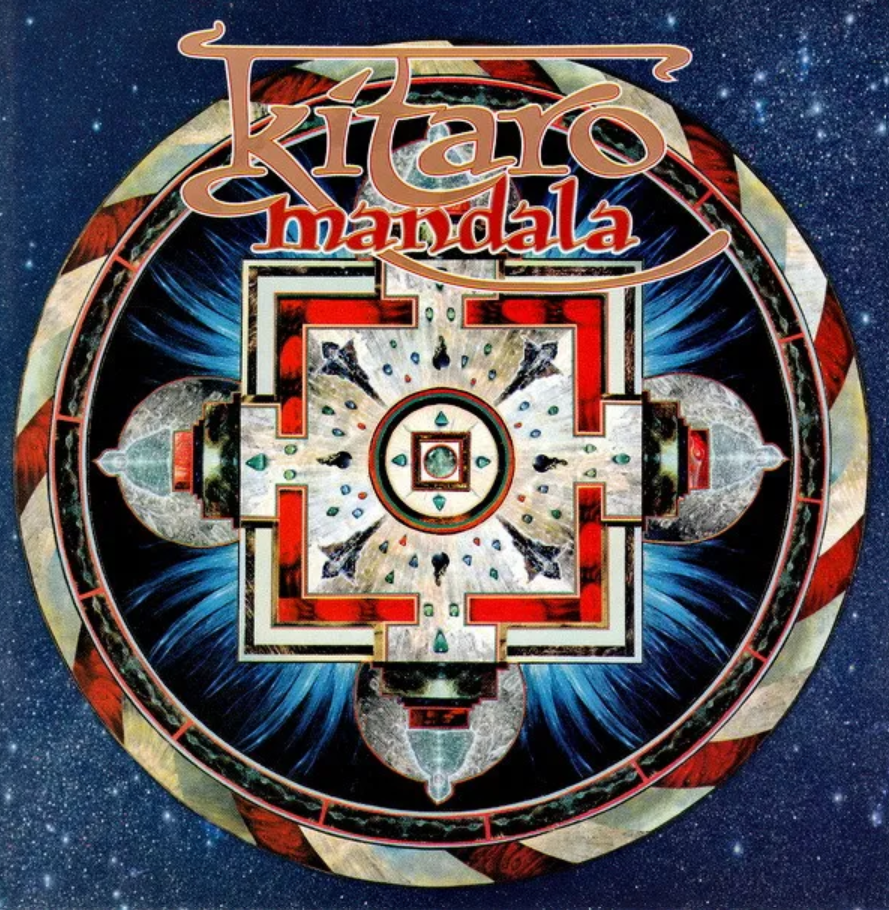
Kitarō – Mandala
This is the third time Masanori Takahashi – or Kitarō – has received a New Age Grammy nomination. We last saw him in 1993, when his Dream album lost to Enya’s Shepherd Moons. Never bet against Enya.
Kitarō’s Dream was a collaboration with Jon Anderson. Apparently prog is infectious, for a lot of Mandala sounds like Pink Floyd. If you like spacey guitars paired with atmospheric synths and bombastic drums, you’ll likely find yourself raising a glass to your stereo as Mandala spins.
Oh, but there are gentler moments too. Sometimes the synths pipe down and the panpipes pipe up, and it all starts to feel like a mating dance between wooden puppets with big round open mouths.
At its best, New Age music makes me feel like I’ve finally been granted an audience with those inscrutable caterpillars who secretly run the universe with their living, breathing cog wheels. Mandala makes me feel like I’m sat in a cavernous auditorium watching a laser light show while a serious clown does something daring with plates onstage.
This is not necessarily a bad thing, but if you’re looking for a gateway to that peaceful inner world – as many surely are who seek out this sort of music – then I’m afraid Mandala may not provide the guidance you need. Though there are some moments, such as during the smoky deep temple jam Winds of Youth, where the secrets of the universe may at least appear graspable.
Think of Kitarō as your own personal New Age Deep Throat. He won’t give you the key, but he’ll meet you on a park bench incognito and mutter a few clues. “Keep going,” he’ll growl, casting his paranoid eyes left and right for obscurant spies and assassins. “You’re so close.”
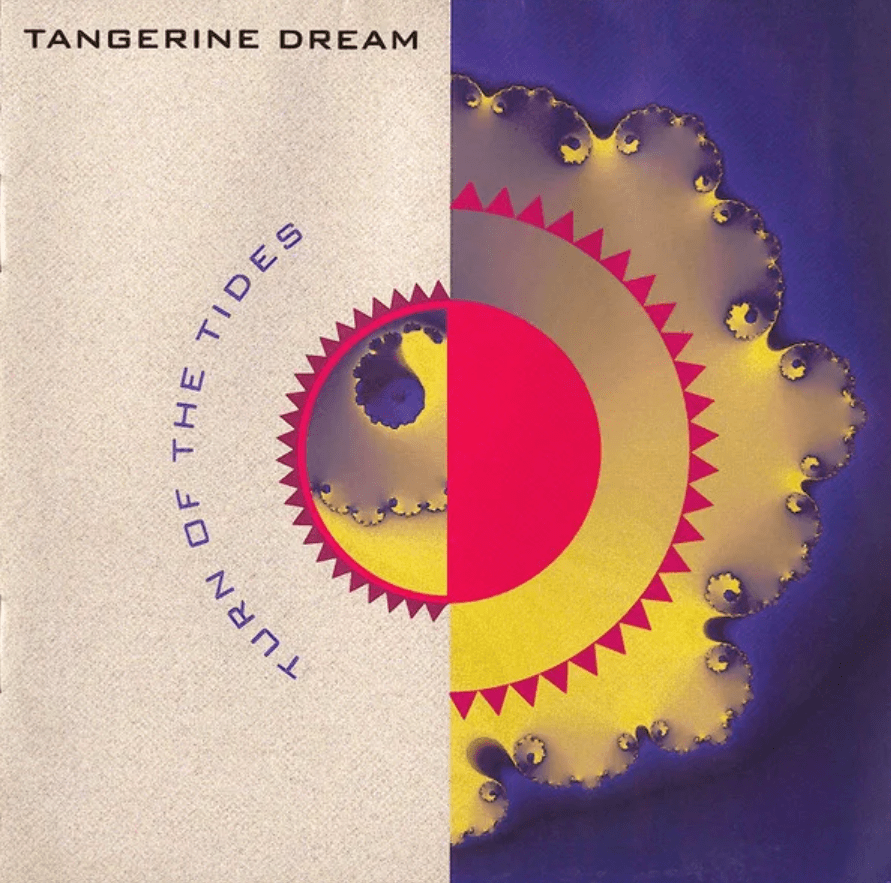
Tangerine Dream – Turn of the Tides
Finally, we have another Tangerine Dream album. It’s Turn of the Tides, their 22nd major studio album, and their 49th release overall.
This is the only studio album in their intimidating discography to feature Yugoslavian guitarist Zlatko Perica as an official member (though he did play on 1993’s 220 Volt Live, which was also nominated for the New Age Grammy). Plus, it’s one of the few albums to feature vocals, and I think it’s the first I’ve ever heard from them to feature acoustic instruments. Saxophone and flamenco guitar on a Tangerine Dream album? Anything can happen in the world of New Age music.
It opens with the sound of thunder and galloping horses, and the main theme from Mussorgsky’s Pictures at an Exhibition. It feels stately, foreboding, important. Yet after this, things immediately give way to your standard 90s Tangerine Dream fare – driving synths, pounding digital drums, mysterious atmospherics, and keening guitars (thanks Zlatko!).
The whole thing’s based on a short story written by synth archmage Edgar Froese, published in a book that does not exist, called The Coachman’s Tales. So we have two albums this month that were intended to soundtrack the written word! And one that was intended to soundtrack a painting. What beautiful lands we walk through, you and I.
You can read Edgar’s story yourself if you squint at the scanned liner notes on Discogs. I recommend you do so. It’s a strange tale involving a trained nightingale, the Jungle of Danger, a valley of “wise sheep”, a man called Villain, and “a blind navigator who would never reach his destination.”
Every track on the album is a different phase of the Coachman’s journey. That moaning sax is in fact the cry of the nightingale as it is sacrificed on the back of a turtle. That synthetic slap bass represents the procession of the Twilight Brigade, gatekeepers of the dunes of Calvacara. Those synths that sound like morose dolphins are indeed “the furious thoughts of the elderly Chayotees”.
This is what I love about this sort of music. No matter how naff it gets – and this is all so very, very naff – there’s always a lot going on. There are always threads to follow, thoughts to unravel, and scented thematic baths in which to sink. This is music with meaning – even if that meaning is lost on anyone but Edgar Froese, who of course took his secrets to the grave.
NEXT TIME: George Winston, Suzanne Ciani! And yet more Kitaro and Tangerine Dream!
 Lord Gloom